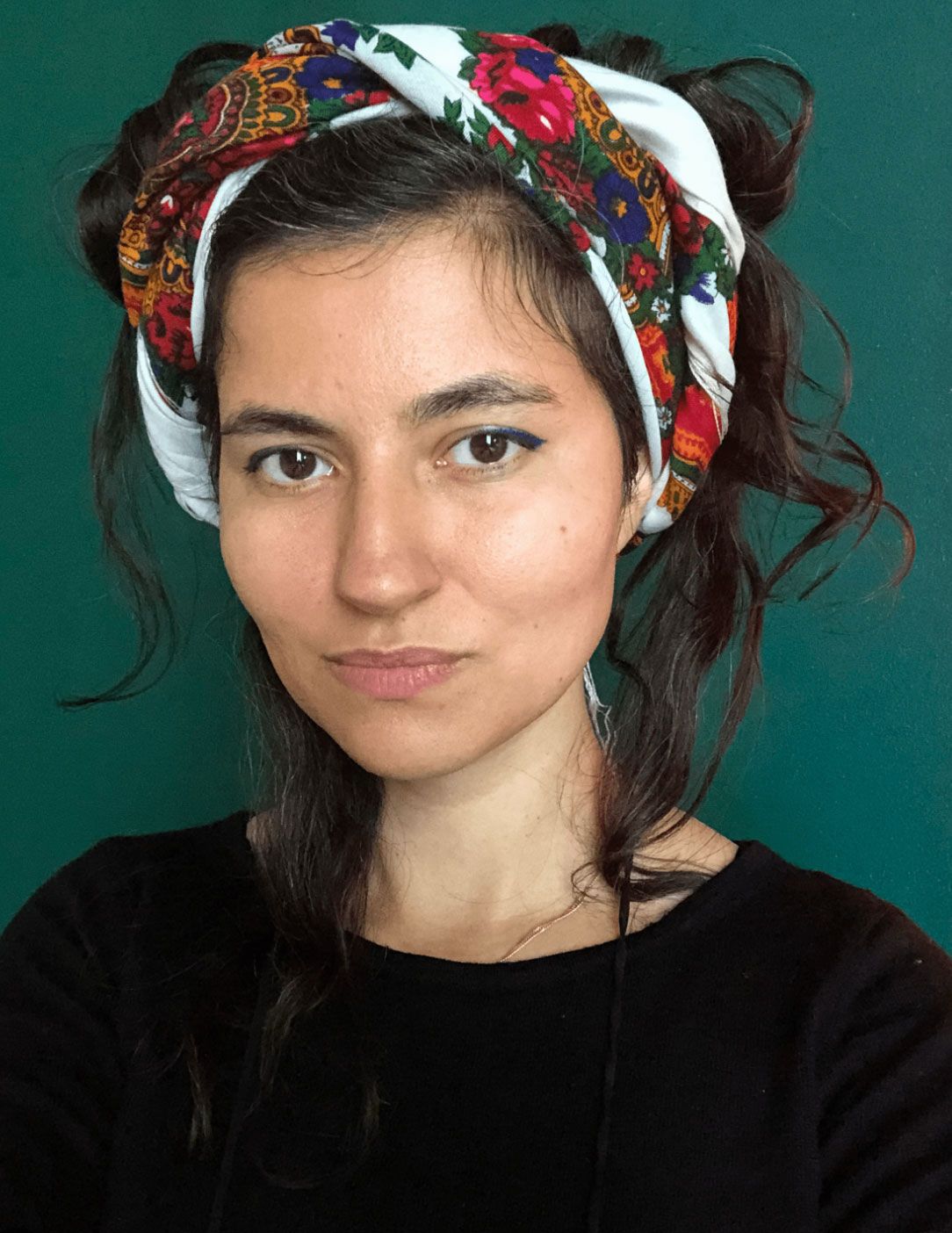
Maryam Tafakory
Maryam Tafakory is an Iranian–British artist and filmmaker born in Shiraz, Iran, whose work brings together experimental cinema, film collage, poetry, archive and performance. Her artistic practice explores themes of censorship, memory, desire, intimacy, and the presence/absence of bodies and narratives erased by power, particularly within the context of post-revolutionary Iranian cinema.
Tafakory combines fragments of archival films with text, poetry and found footage to create visual compositions that reveal social, political and affective tensions, often from a feminist and queer perspective.
Her work has been shown internationally at major institutions such as the Museum of Modern Art (MoMA) in New York, BOZAR in Brussels, the National Gallery of Art in Washington, D.C., and the Academy Museum in Los Angeles, as well as at leading film festivals including the International Film Festival Rotterdam, Cannes Directors’ Fortnight, Locarno Film Festival, Torino Film Festival, TIFF Toronto and the BFI London Film Festival.
Among her most notable films are:
Nazarbazi (2022), a work on love and desire in Iranian cinema that uses poetic fragments to question social norms;
Mast-del (2023), a film exploring a forbidden relationship, combining archival images with an intimate narrative;
Razeh-del (2024), centred on the history of the first Iranian women’s newspaper and presented at international festivals.
Her work has received several international awards, including the Tiger Short Award at the International Film Festival Rotterdam, the Gold Hugo at the Chicago International Film Festival, and the Barbara Hammer Feminist Film Award at the Ann Arbor Film Festival. In 2024, she was awarded the Film London Jarman Award, one of the most prestigious prizes in the UK for artists working with film and moving image.
In addition to her cinematic work, Tafakory incorporates performative practices and continues to develop projects that question structures of power, history and representation, maintaining an active presence on the international art and cinema scene.
Tafakory combines fragments of archival films with text, poetry and found footage to create visual compositions that reveal social, political and affective tensions, often from a feminist and queer perspective.
Her work has been shown internationally at major institutions such as the Museum of Modern Art (MoMA) in New York, BOZAR in Brussels, the National Gallery of Art in Washington, D.C., and the Academy Museum in Los Angeles, as well as at leading film festivals including the International Film Festival Rotterdam, Cannes Directors’ Fortnight, Locarno Film Festival, Torino Film Festival, TIFF Toronto and the BFI London Film Festival.
Among her most notable films are:
Nazarbazi (2022), a work on love and desire in Iranian cinema that uses poetic fragments to question social norms;
Mast-del (2023), a film exploring a forbidden relationship, combining archival images with an intimate narrative;
Razeh-del (2024), centred on the history of the first Iranian women’s newspaper and presented at international festivals.
Her work has received several international awards, including the Tiger Short Award at the International Film Festival Rotterdam, the Gold Hugo at the Chicago International Film Festival, and the Barbara Hammer Feminist Film Award at the Ann Arbor Film Festival. In 2024, she was awarded the Film London Jarman Award, one of the most prestigious prizes in the UK for artists working with film and moving image.
In addition to her cinematic work, Tafakory incorporates performative practices and continues to develop projects that question structures of power, history and representation, maintaining an active presence on the international art and cinema scene.